Commercial & Industrial Solutions

Portable Solutions
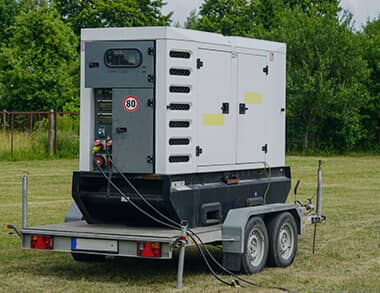
Why Generator Training May Be the Most Overlooked Reliability Investment Your Facility Can Make
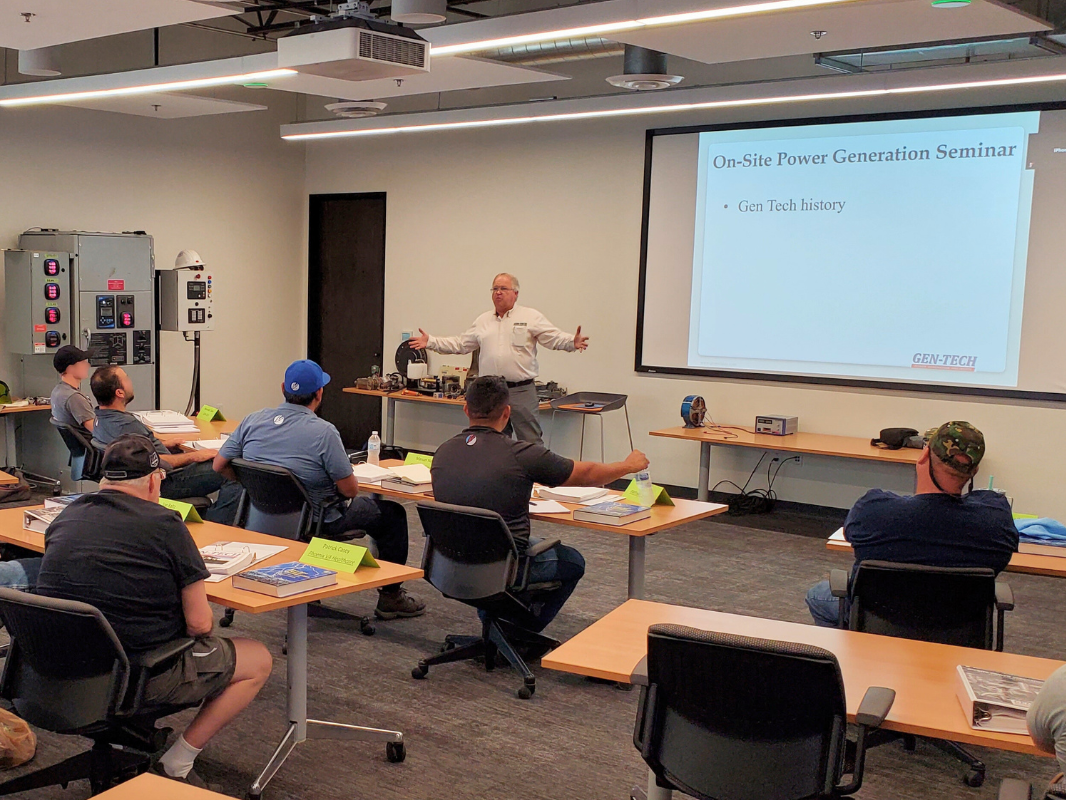
A training-first perspective on safer operation, stronger maintenance practices, and better emergency power readiness.
Training Is Part of the Reliability System
When organizations evaluate backup power reliability, the conversation usually begins with equipment. They invest in generators, transfer switches, fuel systems, controls, monitoring, and preventive maintenance. Those assets matter, but equipment alone does not create readiness.
The people responsible for operating, inspecting, and maintaining the system also need the knowledge to recognize abnormal conditions, interpret alarms, follow safe procedures, and respond appropriately when something changes.
That is why generator training should not be treated as an optional add-on after equipment is installed. It should be considered part of the facility’s overall reliability strategy.
The Training Gap Many Facilities Do Not See
A generator may be professionally maintained and still leave an organization exposed if operational knowledge is concentrated in one person or if personnel have never received formal instruction.
A useful training-needs discussion starts with practical questions:
- Can more than one person explain what happens between a utility failure and transfer to generator power?
- Can operators distinguish between a warning, a shutdown, and a condition that requires immediate escalation?
- Are inspections completed consistently regardless of who performs them?
- Does the team know what information to capture when the generator fails to start?
- Can personnel operate within their training and authorization while recognizing when qualified service support is required?
Why Hands-On Generator Training Matters
Manuals, webinars, and classroom instruction can provide useful background. However, emergency power systems are physical assets, and effective training should connect theory to the equipment personnel actually encounter.
Hands-on instruction can help participants build practical familiarity with:
- Generator operation and control modes
- Automatic transfer switch function and system sequence
- Preventive maintenance observations
- Alarm recognition and documentation
- Diagnostic and troubleshooting principles
- Safe work boundaries and escalation procedures
Five Capabilities Generator Training Should Build
- Understanding the Complete Emergency Power System
- Personnel should understand that the generator is one part of a larger system. Training should explain the relationship between the engine, alternator, controls, starting system, fuel system, transfer equipment, monitoring, and downstream loads. This system-level view helps teams recognize where a problem may be occurring and communicate more effectively with service providers.
- Conducting Consistent Inspections
- Training should give personnel a repeatable framework for observing equipment condition, reviewing indicators, documenting abnormalities, and escalating unresolved issues. Consistency matters because an inspection is only useful when the findings are clear, comparable, and acted upon.
- Recognizing and Responding to Alarms
- An alarm should not become a routine reset. Personnel need to know how to record the exact condition, review the operating context, follow site and manufacturer procedures, and involve qualified technical support when the issue exceeds their training or authorization.
- Applying Troubleshooting Principles
- Good training teaches a disciplined approach rather than guesswork. For conditions such as failure to start, high coolant temperature, low oil pressure, a charger fault, or a transfer concern, personnel should know what information to gather and what actions are appropriate within their role.
- Operating Safely
- Generator and transfer systems involve electrical energy, rotating equipment, hot surfaces, batteries, fuel, exhaust, and other hazards. Training must reinforce site safety procedures, equipment-specific instructions, authorization limits, and the importance of qualified support.
Who Benefits from Generator Training?
Facility managers
- Stronger oversight of readiness, maintenance priorities, documentation, and escalation.
Maintenance personnel
- Greater familiarity with inspections, common failure indicators, and communication with service technicians.
Plant and facility engineers
- A clearer understanding of system operation, interactions, and operational risk.
Electrical contractors
- Added context around generator operation, transfer systems, and customer handover needs.
Operations teams
- Improved readiness to recognize and communicate abnormal conditions during an outage.
What to Look for in a Generator Training Program
A strong program should be practical, relevant to the participants, and connected to real operational responsibilities. When evaluating a provider, look for:- Hands-on instruction using functional power generation equipment
- Experienced instructors who can connect fundamentals to field conditions
- Coverage of operation, maintenance awareness, alarms, diagnostics, troubleshooting, and safety
- A curriculum appropriate for the participants’ roles and existing knowledge
- The ability to tailor content to the organization’s equipment, maintenance program, and operational priorities
- Clear boundaries between operator-level awareness and work requiring qualified technical service
Training Strengthens the Value of Maintenance and Testing
Training does not replace preventive maintenance, qualified service, or system testing. It helps facility personnel get more value from those activities by improving observation, documentation, communication, and follow-through.
A trained team is better positioned to recognize developing issues, understand the purpose of scheduled work, provide useful information to technicians, and maintain continuity when responsibilities change.
The result is a more complete reliability program: capable equipment, disciplined maintenance, regular testing, and personnel who understand their role.
Build Power Generation Knowledge Before the Next Outage
Organizations invest significantly in emergency power infrastructure. Protecting that investment requires more than equipment and service schedules. It requires people who understand the system, know what to look for, and can respond appropriately when utility power fails.
Gen-Tech provides expert-led, hands-on power generation training for maintenance personnel, facility engineers, contractors, business owners, and operations teams. Available training covers power generation fundamentals, system operation, preventive maintenance, diagnostics, troubleshooting, and emergency power reliability.
Programs can also be customized around a company’s equipment, maintenance program, operational priorities, and compliance needs.
READY TO STRENGTHEN YOUR TEAM'S POWER GENERATION CAPABILITIES?
Explore Gen-Tech’s hands-on and customized training options, or call (800) 625-8324 to discuss your team’s needs.
View Gen-Tech Training Programs
From Insights to Power: Let’s Talk Solutions
Whether you need emergency power, maintenance, or expert guidance on your generator system, Gen-Tech has you covered. Our experienced team provides industry-leading service to keep your power running when it matters most. Call (800) 625-8324 to discuss your power generation needs today!
Contact Us


