Commercial & Industrial Solutions

Portable Solutions
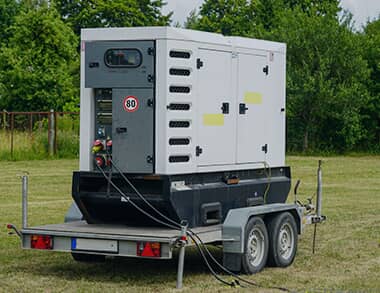
Your Generator Is Ready. Is Your Team?
Why hands-on generator training is the reliability investment most facilities overlook.
Training Is Part of the Reliability System
When organizations evaluate backup power reliability, the conversation usually begins with equipment. They invest in generators, transfer switches, fuel systems, controls, monitoring, and preventive maintenance. Those assets matter, but equipment alone does not create readiness.
The people responsible for operating, inspecting, and maintaining the system also need the knowledge to recognize abnormal conditions, interpret alarms, follow safe procedures, and respond appropriately when something changes.
That is why generator training belongs in your reliability strategy, not as an add-on after equipment is installed.
The Training Gap Many Facilities Do Not See
A generator may be professionally maintained and still leave an organization exposed if operational knowledge is concentrated in one person or if personnel have never received formal instruction. A useful training-needs discussion starts with practical questions:
- Can more than one person explain what happens between a utility failure and transfer to generator power?
- Can operators distinguish between a warning, a shutdown, and a condition that requires immediate escalation?
- Are inspections completed consistently regardless of who performs them?
- Does the team know what information to capture when the generator fails to start?
- Can personnel operate within their training and authorization while recognizing when qualified service support is required?
Compliance Drivers: Where Training Fits
- NFPA 110, Standard for Emergency and Standby Power Systems
- NFPA 110 calls for a documented program of routine inspection, exercise, and testing, including weekly inspections and monthly exercise under load. When monthly runs do not reach the required load levels, supplemental load bank testing is required. Every one of those inspections and logs depends on people who know what they are looking at and what to record.
- NFPA 70E, Standard for Electrical Safety in the Workplace
- Generators, transfer switches, and switchgear expose personnel to shock and arc flash hazards. NFPA 70E expects employers to train workers on the electrical hazards they face, the procedures that protect them, and the limits of their qualifications, and to retrain at regular intervals.
- The Joint Commission
- Hospitals and other accredited healthcare organizations must test their emergency power supply systems on a defined schedule and keep complete records. Surveyors review that documentation and may ask staff how they respond to a generator or transfer failure.
Five Capabilities Generator Training Should Build
- Understanding the Complete Emergency Power System
- The generator is one part of a larger system that includes the engine, alternator, controls, starting and fuel systems, transfer equipment, monitoring, and downstream loads. A system-level view helps teams pinpoint where a problem may be and communicate clearly with service providers.
- Conducting Consistent Inspections
- Personnel need a repeatable framework for observing equipment condition, documenting abnormalities, and escalating unresolved issues. An inspection is only useful when its findings are clear, comparable, and acted upon, and NFPA 110 and accreditation surveyors expect those records to hold up.
- Recognizing and Responding to Alarms
- An alarm should never become a routine reset. Personnel should know how to record the exact condition, follow site and manufacturer procedures, and call qualified support when an issue exceeds their training or authorization. Remote alerting gets the right people notified fast. Training makes sure they know what the alert means.
- Applying Troubleshooting Principles
- When the generator will not start, shuts down, or fails to transfer, personnel should know what information to gather and which actions are appropriate within their role. Disciplined troubleshooting replaces guesswork and gives technicians a head start.
- Operating Safely
- Generator and transfer systems involve electrical energy, rotating equipment, hot surfaces, batteries, fuel, and exhaust. Training must reinforce site safety procedures, NFPA 70E practices, authorization limits, and when to bring in qualified support.
Who Benefits from Generator Training?
Facility managers
- Stronger oversight of readiness, maintenance priorities, documentation, and escalation.
Maintenance personnel
- Greater familiarity with inspections, common failure indicators, and communication with service technicians.
Plant and facility engineers
- A clearer understanding of system operation, interactions, and operational risk.
Electrical contractors
- Added context around generator operation, transfer systems, and customer handover needs.
Operations teams
- Improved readiness to recognize and communicate abnormal conditions during an outage.
How Gen-Tech Delivers Hands-On Generator Training
A strong training program should offer hands-on work on functional equipment, experienced instructors, content tailored to your team’s roles and equipment, and clear boundaries between operator awareness and qualified service work. Gen-Tech, a T&T Power Group company, builds its programs around exactly that, taught by the same people who maintain, repair, test, and respond to emergency power systems every day.
| Course | Length | Format | Best For |
| On-Site Power Generation Training | 3 to 4 days | At Gen-Tech Glendale, AZ training facility | Teams that need a solid foundation in power generation fundamentals, system operation, and maintenance. Includes a certificate of completion. |
| Customized Training Program | 4 to 5 days | At your facility | Organizations that want training built around their own equipment, maintenance program, and compliance needs. Includes a customized training manual and certificate of completion. |
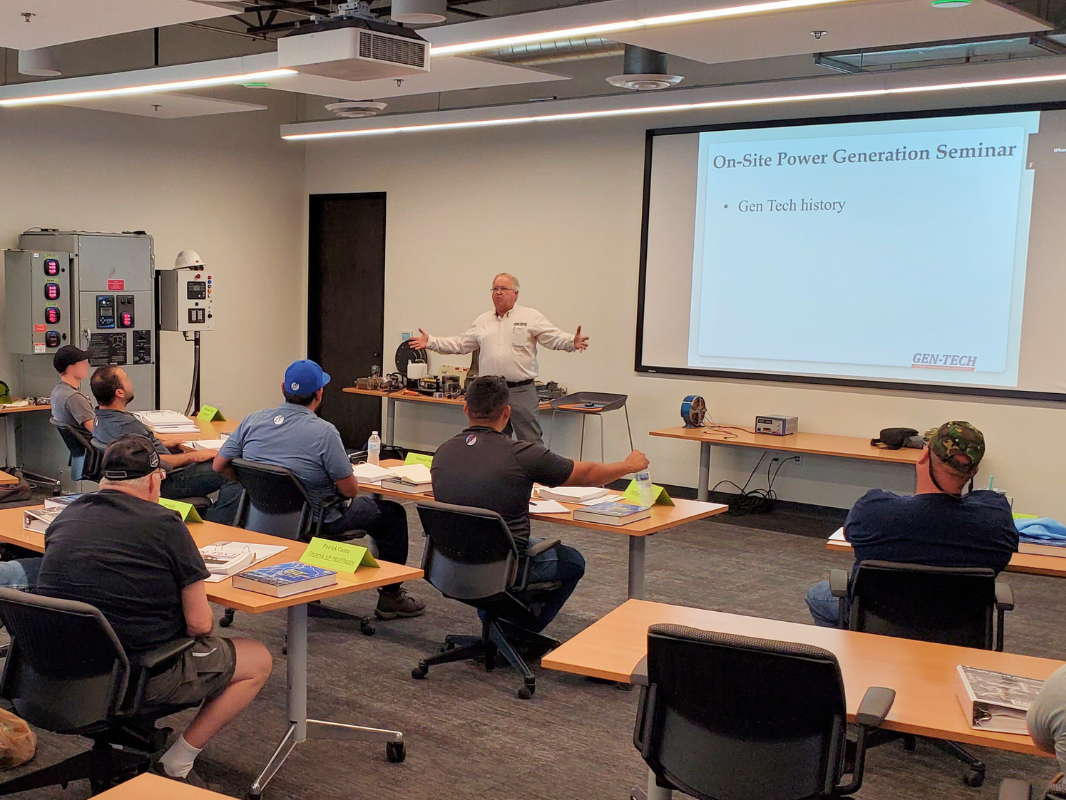
Gen-Tech’s one-of-a-kind training facility in Glendale, Arizona pairs classroom instruction with functional generator, transfer switch, and switchgear equipment. Teams that prefer to learn on their own equipment can train on-site.
What Trainees Work On
- electricity, magnetism, and power generation principles.
- governors, voltage regulation, protective relaying, start/stop logic, and fuel systems.
- transfer switches, paralleling, switchgear controls, emissions, and engine and generator maintenance.
Meet Your Instructor: Gen-Tech Founder Bob Piske
What Trainees Say
Training Strengthens the Value of Maintenance and Testing
Build Power Generation Knowledge Before the Next Outage
View Gen-Tech Training Programs
From Insights to Power: Let’s Talk Solutions
Whether you need emergency power, maintenance, or expert guidance on your generator system, Gen-Tech has you covered. Our experienced team provides industry-leading service to keep your power running when it matters most. Call (800) 625-8324 to discuss your power generation needs today!
Contact Us


